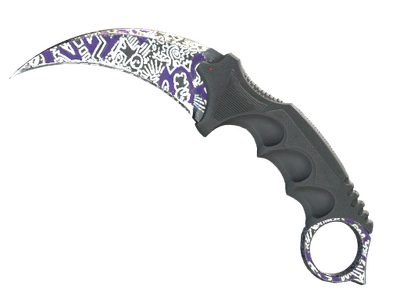
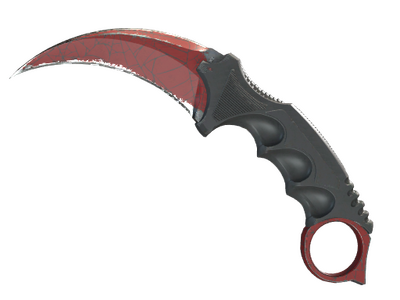
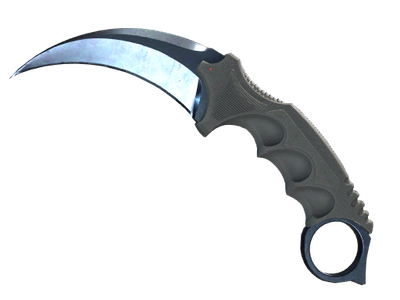
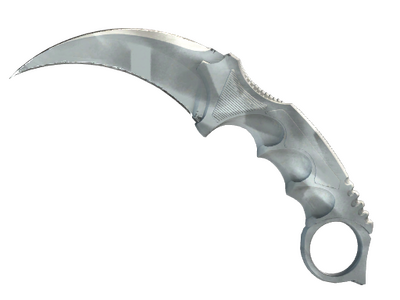
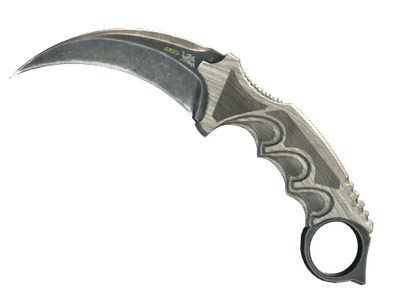
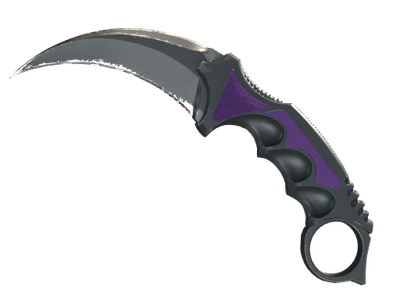
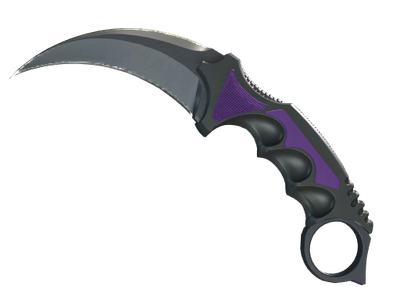
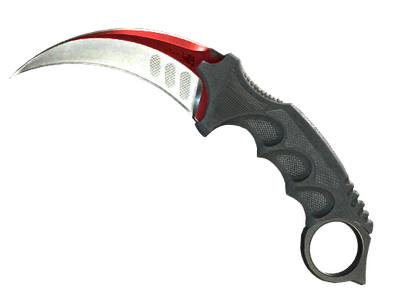
Karambit CS2: what you are buying
The Karambit takes its shape from the Southeast Asian claw knife it is named after. It arrived with the first weapon case that introduced knives to Counter-Strike. It still sets the reference for every claw-shaped blade that came after it: the Talon Knife has a similar shape and shares many of the same finishes at a lower price. What separates the model is screen presence: the finger ring and the inward curve hold the painted side of the blade toward the camera through the whole inspect animation, so on a Karambit the playside does the work a straight blade splits between two faces. A Karambit CS:GO skin is the same item in CS2, which is why the pattern and phase lists the community built back then still describe what you see in the inspect view. Knives sit in the gold ★ rare special item tier, above Covert; the listings still read Covert because that is the tag Steam attaches to knife-tier items. Sort the grid above by price to find where the model starts, or open the CS2 knives catalog to compare it with other models.
Finishes by case generation
Every Karambit finish belongs to one of three pools. The pool tells you which case generation produced it and which other knives carry the same finish:
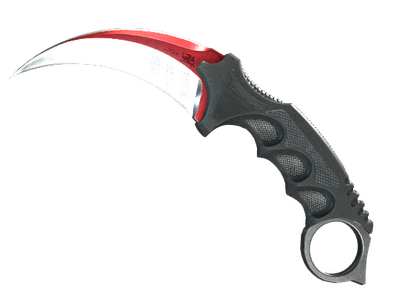
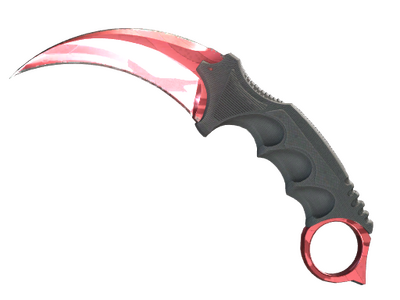
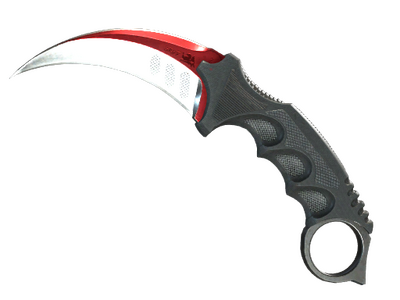
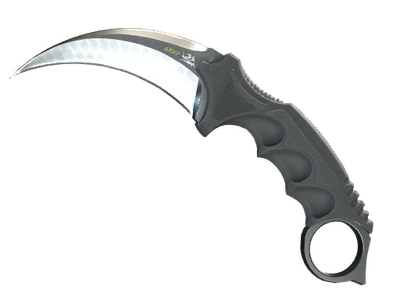
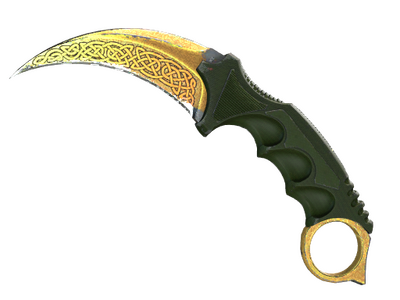
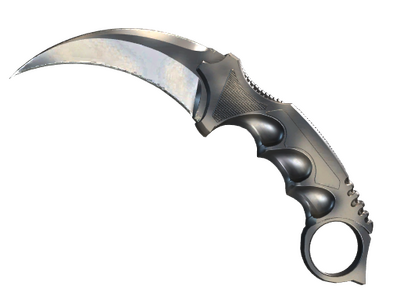
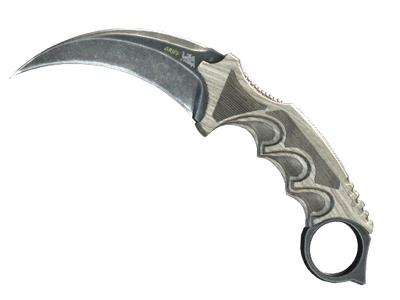
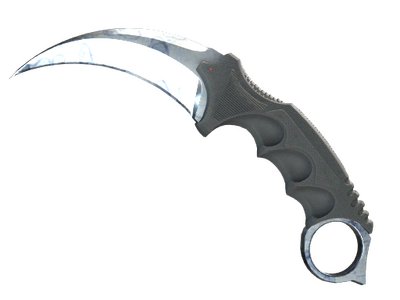
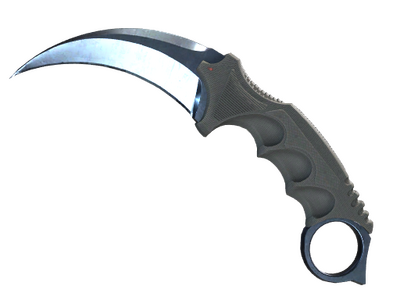
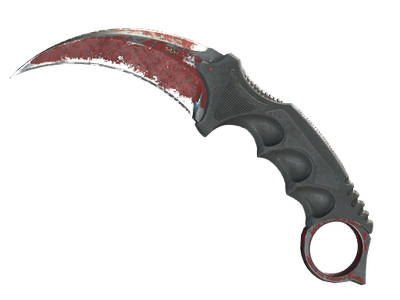
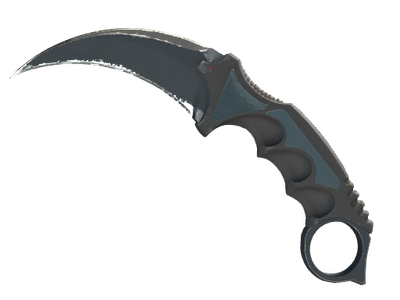
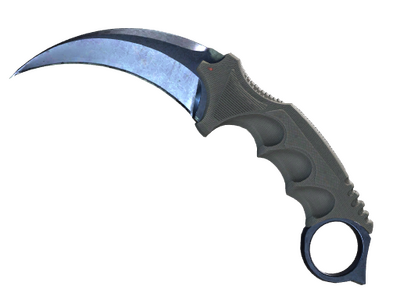
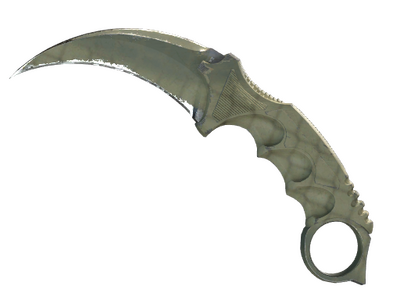
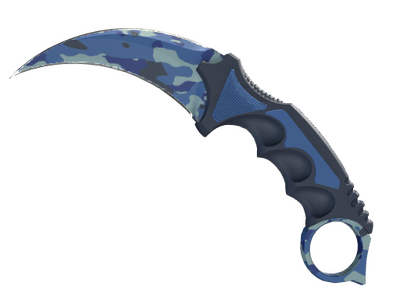
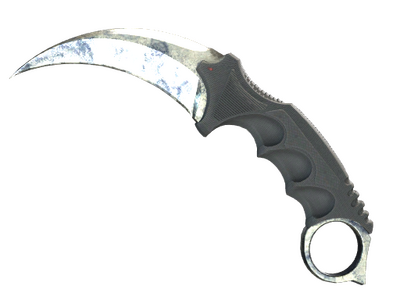
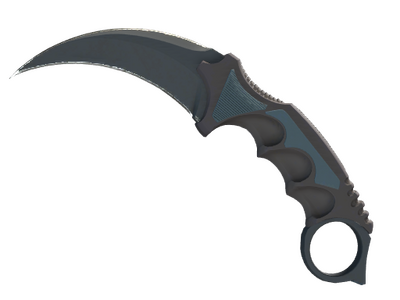
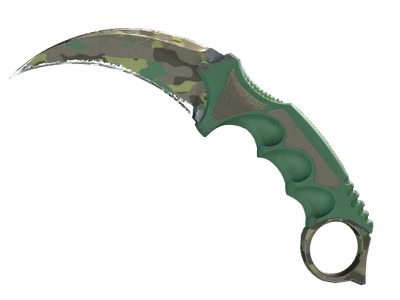
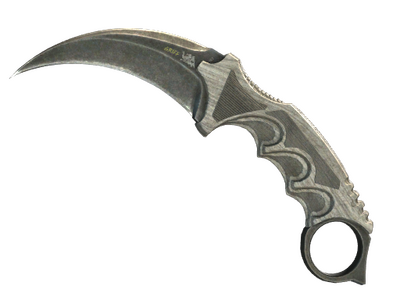
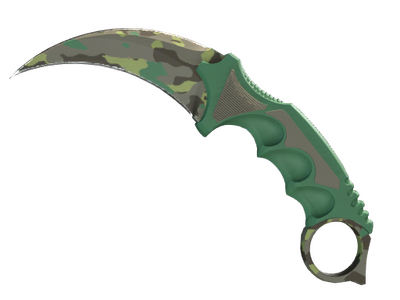
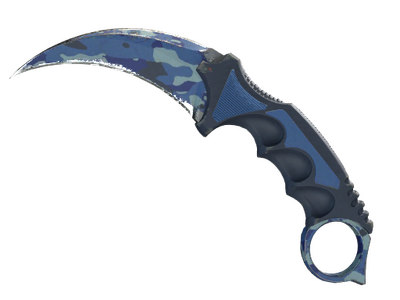
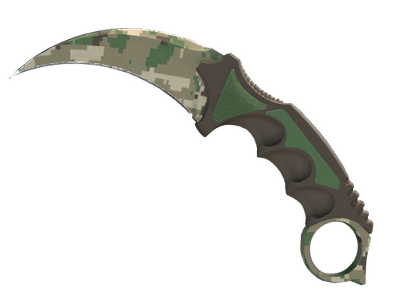
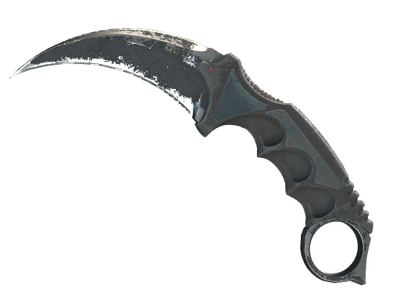
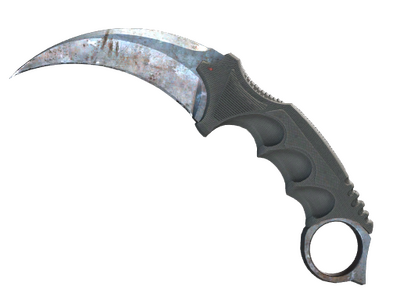
- Original pool, from the CS:GO Weapon Case and its second and third editions: the camo finishes (Safari Mesh, Boreal Forest, Forest DDPAT, Urban Masked, Scorched), the plain blades (Night, Stained, Blue Steel), plus Crimson Web, Slaughter, Fade and Case Hardened. The camo group is the entry point to the model, Fade and Case Hardened sit at the other end of it, and the same pool runs on the Flip Knife and the Gut Knife at a fraction of the price.
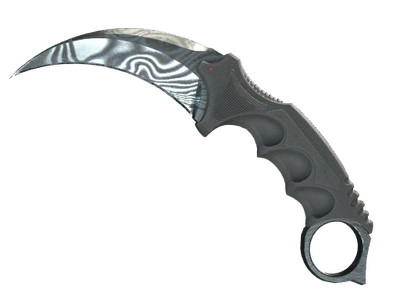
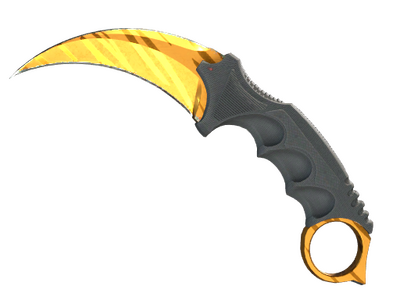
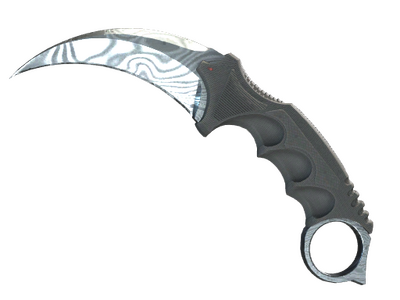
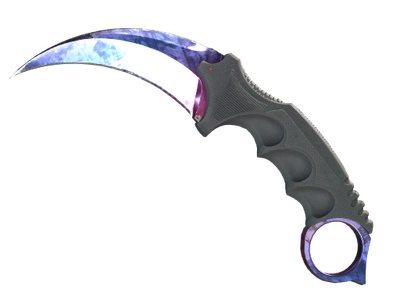
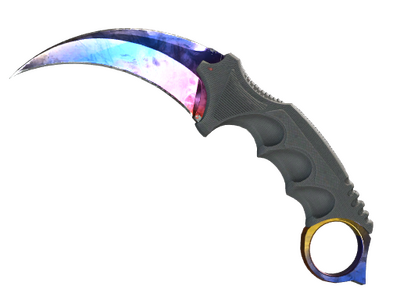
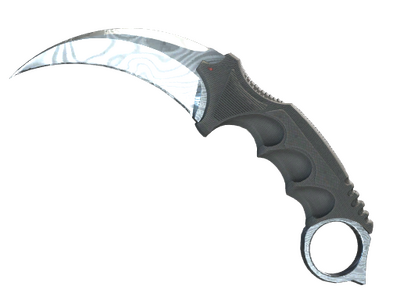
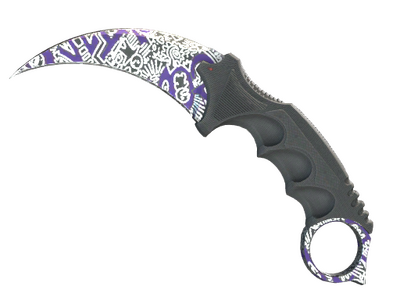
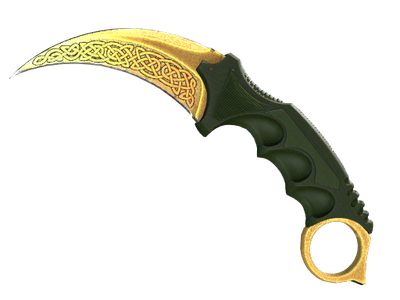
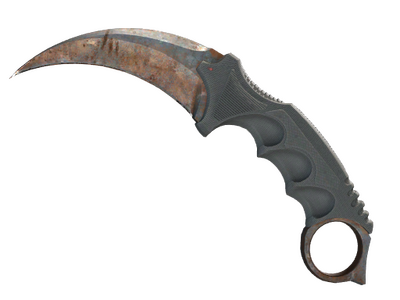
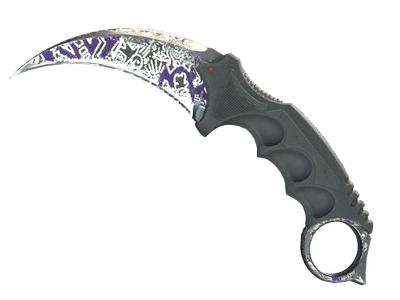
- Chroma pool, from the Chroma Case, Chroma 2 and Chroma 3: Doppler, Marble Fade, Tiger Tooth, Damascus Steel, Ultraviolet and Rust Coat. This is where the blade stops being camouflage and starts being colour.
- Gamma pool, from the Gamma Case and Gamma 2: Gamma Doppler, Lore, Autotronic, Black Laminate, Bright Water and Freehand - the only pool with finishes drawn around the shape of the blade rather than applied across it.
One item sits outside the pools: the ★ Karambit with no finish at all, which the listings show as Not Painted and which has neither float nor exterior, so price is the only variable left to compare. Cases are also no longer the only route in. A trade-up contract built from Covert skins of a collection that carries knives returns a gold-tier item from that same collection, which means part of the supply on the market now comes from contracts rather than case openings. The average float of the inputs decides the wear of the result, and StatTrak inputs return a StatTrak knife.
Doppler and Gamma Doppler phases
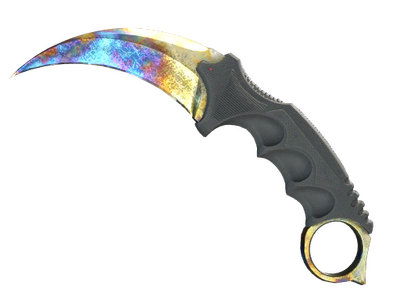
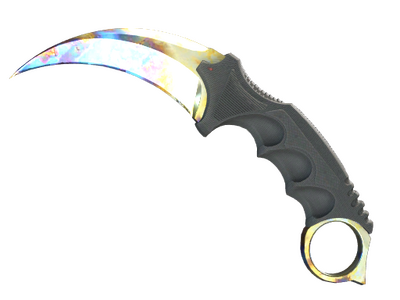
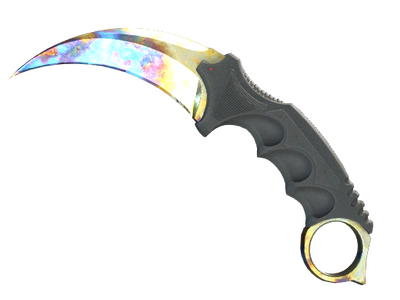
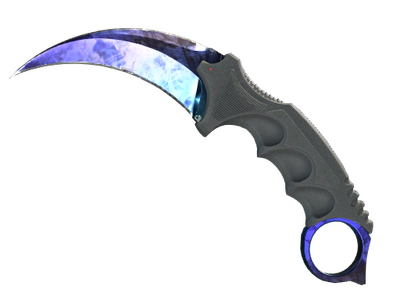
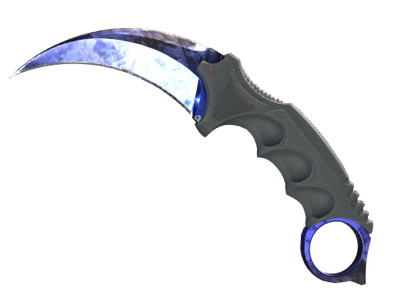
The Karambit Doppler and the Karambit Gamma Doppler are families rather than single finishes. The phase is rolled at the drop, never changes afterwards, and decides which part of the palette reaches the blade: Phase 2 carries the most pink, Phase 4 the most blue, and Phase 1 and Phase 3 fall between them and cost less. Gamma Doppler runs the same structure in green. A Doppler listing tells you nothing until you check its phase, which is why the phase filter is so useful here. Above the numbered phases sit the outcomes that replace them instead of grading them: Ruby, Sapphire and Black Pearl on Doppler, Emerald on Gamma Doppler. They come out of the same drop as the numbered phases rather than from a separate case, so filtering the grid is the only reliable way to see the ones currently on sale.
Case Hardened and the Karambit blue gem
Every Case Hardened copy carries a pattern seed fixed at the moment it dropped, and that seed decides where blue, gold and purple land on the blade. The playside, the face you see in the inspect animation and in your hand during a round, has the greatest effect on price. A playside that is almost entirely blue is what the market calls a blue gem. Two things are worth knowing before paying a pattern premium: the tier lists are community work rather than Valve data, so two of them can disagree about the same seed, and wear costs more here than on a flat finish, because a higher float lays a darker layer over the blade and dulls exactly what you paid for. Each listing shows its own pattern number, and the Pattern filter above narrows the grid to the seed you are hunting.
Fade, Marble Fade and Fire and Ice
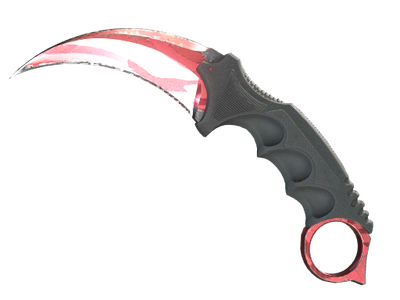
The Karambit Fade and the Karambit Marble Fade are graded by layout rather than by wear, and each has its own vocabulary. Fade is scored as a percentage describing how the gradient sits on the blade, higher numbers carry the premium, and the Fade slider above filters the grid by that number before you start comparing listings. Marble Fade has no wear-driven variation worth chasing at all: its seed decides how red, yellow and blue swirl across the blade, and the layout collectors want is Fire and Ice, where red and blue meet on the playside with no yellow break. Community Fire and Ice tier lists rank those seeds the same way blue gem lists rank Case Hardened. In both systems the number is confirmed in the inspect view rather than from a screenshot, and that check is what separates a ranked layout from a copy that merely looks close to one.
Float, exterior and StatTrak
Float ranges are not the same across the pool, and that catches buyers out. Several Karambit finishes never spawn at the clean end of the scale, so their Factory New copies start higher up the range than the exterior name suggests, while Fade and Marble Fade are capped so tightly that only the top exteriors exist for them. When the exact number matters, use the float fields above instead of the exterior label. Where wear shows depends on the finish as well: on the camo group it disappears into the pattern, on a solid blade it collects along the curve of the spine where the light sits, and on a pattern finish it eats into the part of the blade you bought. StatTrak adds a kill counter and usually a premium, but not evenly — on finishes bought for their pattern the seed outranks the counter, and a plain copy with a ranked seed can be worth several times a StatTrak copy with an ordinary one. The Butterfly Knife, M9 Bayonet and Bayonet carry the same original finish pool, so when a specific finish matters more than the model, compare those categories before you buy.
Buying and selling a Karambit on white.market
- Sign in with Steam OpenID, then connect your e-mail and Steam Trade Link.
- Fund your balance with a bank card or crypto.
- Filter the grid down to the finish, phase, pattern or float you want, then press Buy on the listing.
- To sell, pick the item from your inventory, set a price against the listings above, and confirm the trade when it sells.
FAQ
Can I pick the exact pattern when I buy a Karambit?
Yes. Every listing carries its own pattern number and float, and the Pattern and Float filters narrow the grid down to a single seed or range.
Which Karambit finishes are the cheapest way into the model?
The camo group - Safari Mesh, Boreal Forest, Forest DDPAT, Urban Masked and Scorched - sits at the bottom of the model's range, and the worn exteriors of those finishes are the cheapest copies on the board. Sorting the listings by price gets you there faster than any ranking would.
Is a StatTrak Karambit always worth more than the plain version?
No. StatTrak usually carries a premium, but on Case Hardened and Marble Fade the pattern sets the price, so a plain copy with a ranked seed can be worth several times a StatTrak copy with an ordinary one.
Does the Karambit exist without a finish?
Yes. The ★ Karambit is the default blade with no paint on it, listed as Not Painted. It has no float and no exterior, so two copies differ only in price.
Does a knife skin change anything in a round?
No. Damage, speed and reach are identical to the default knife, and the finish is cosmetic. What the Karambit changes is the draw and inspect animation.
How does a P2P marketplace handle an item this expensive?
The knife goes straight from the seller's inventory to the buyer, with no bot holding the item in between. It stays with the seller until the trade is confirmed.