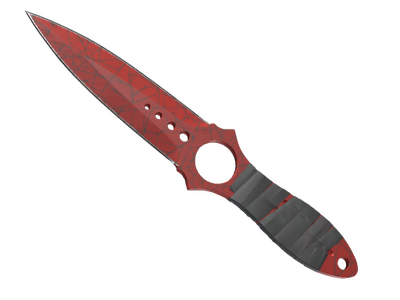
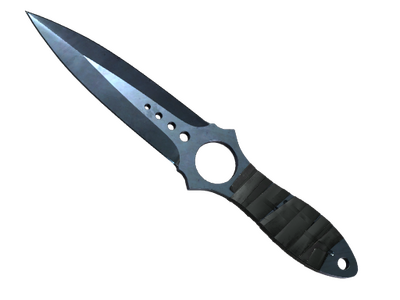
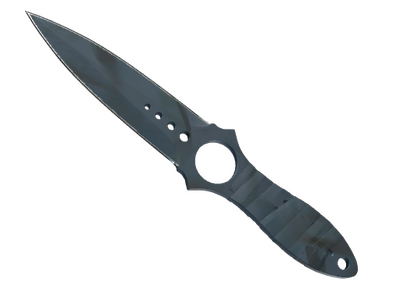
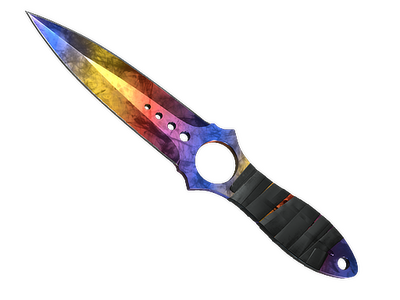
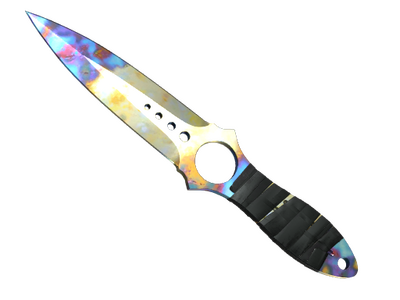
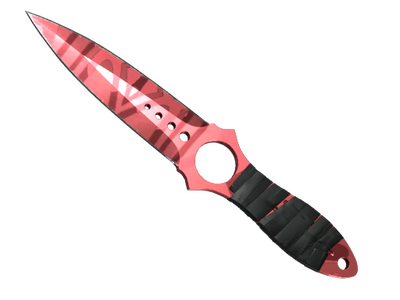
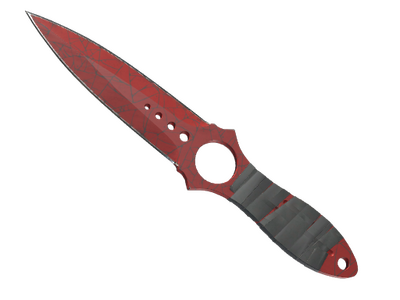
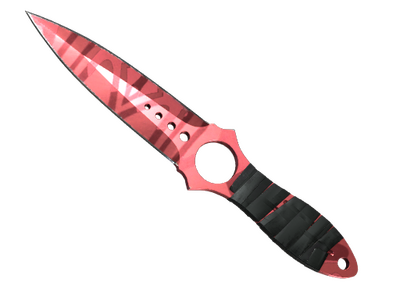
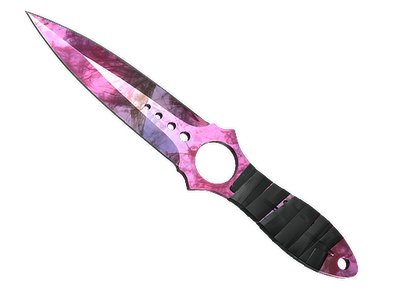
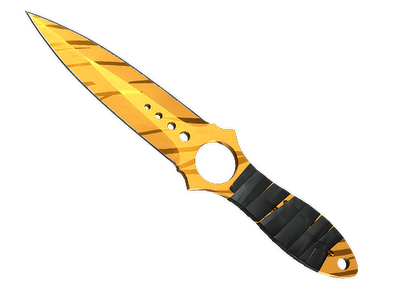
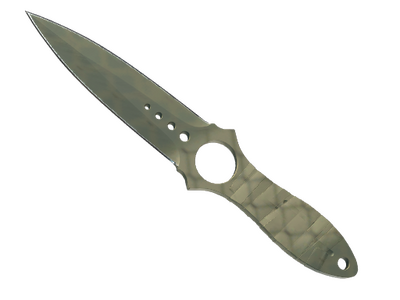
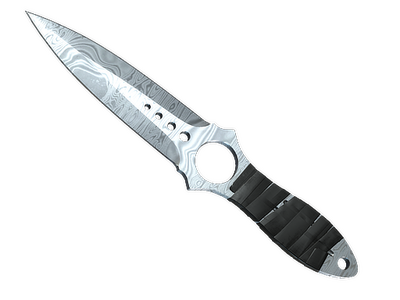
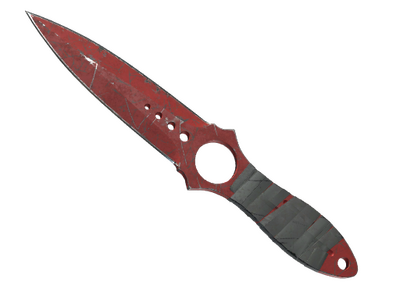
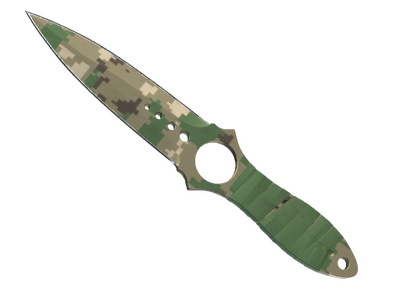
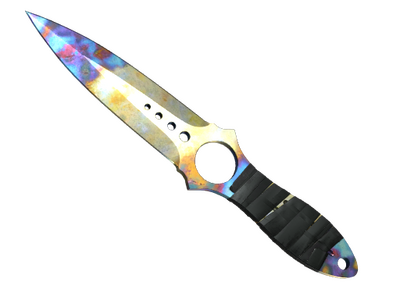
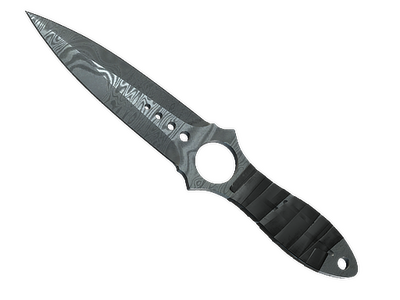
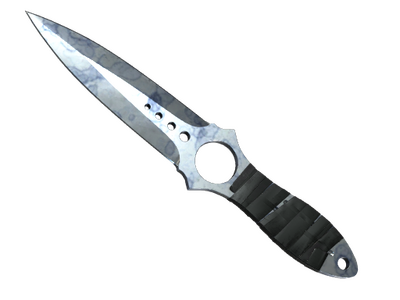
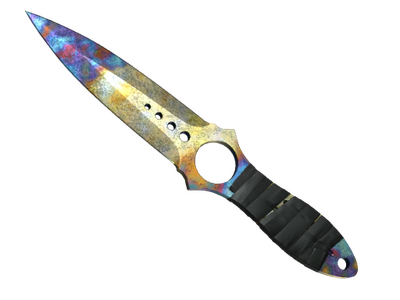
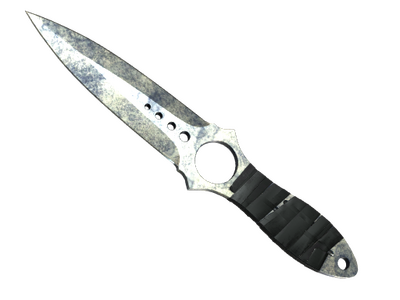
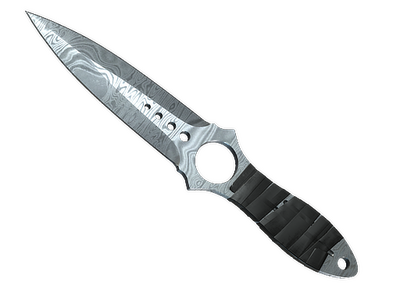
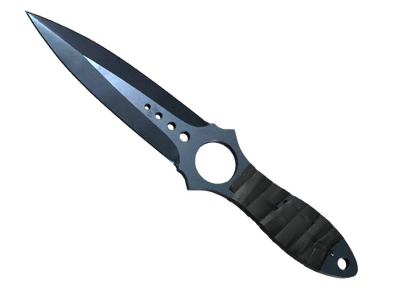
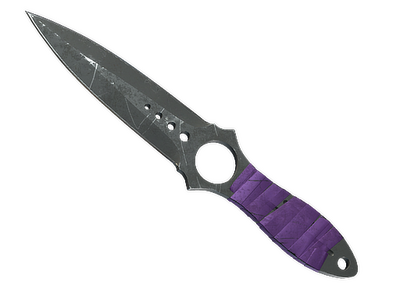
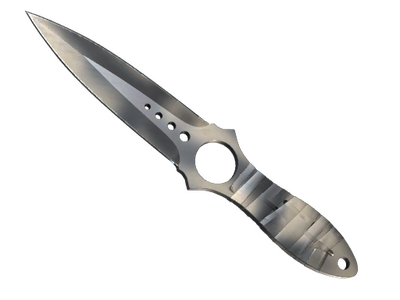
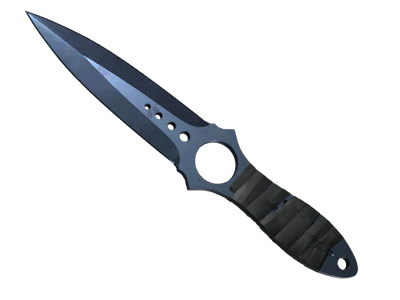
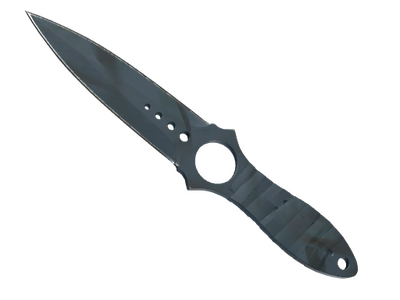
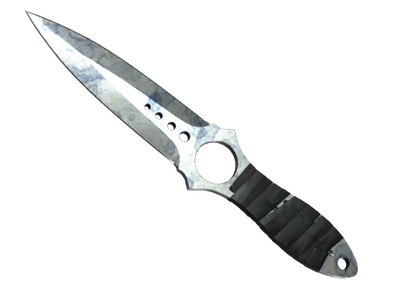
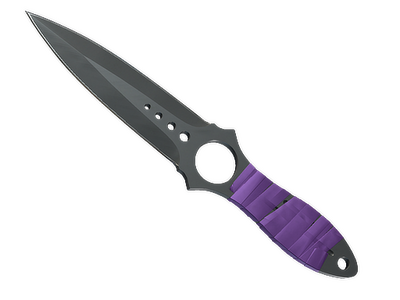
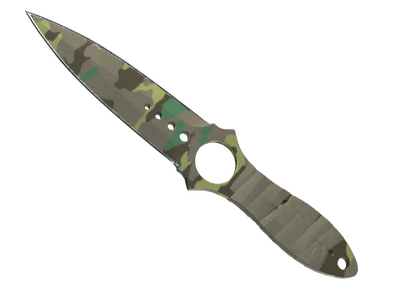
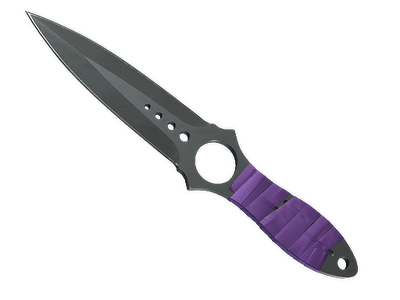
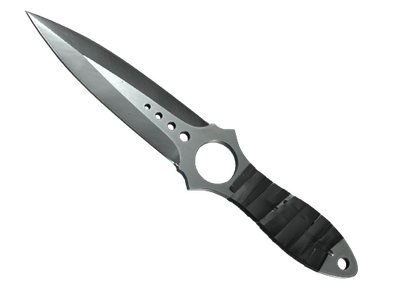
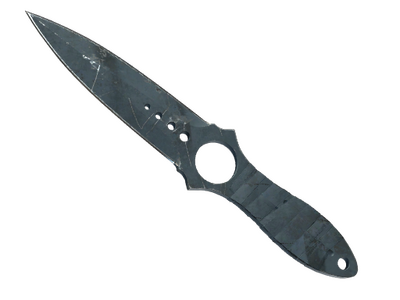
Skeleton knife: the open-frame blade from the Shattered Web knife family
Skeleton knife is a slim custom knife built around an exposed, skeletonized tang, a taped grip and a large finger ring near the end of the handle. It entered Counter-Strike with Operation Shattered Web and sits in the gold-star rare special item tier above Covert. Within the CS2 knives catalogue, the open-frame construction makes it easy to distinguish from models built around a solid handle, while its draw and inspect sequences can include the characteristic finger-ring spin.
The model arrived in the same knife family as the Nomad Knife, Paracord Knife and Survival Knife. They share part of their case history and finish pool, but the Skeleton stands apart through the exposed handle and the way the blade rotates around the finger ring during its special animations. That makes model choice relevant even before finish, float or pattern enters the comparison.
Skeleton knife CS finishes: original skins and the Fever Case additions
The finish catalogue falls into an original Shattered Web group and a later group added through the Fever Case. The original Skeleton Knife CSGO selection established the darker camouflage finishes, patterned options and the unpainted version associated with the model, while the later expansion brought several finishes that had already become familiar on other knife families.
The main groups are:
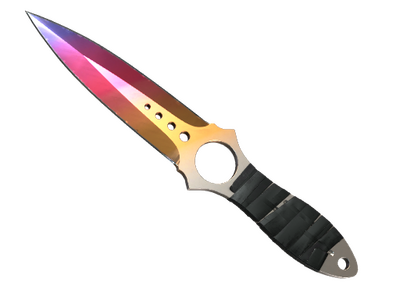
- The original pool includes Vanilla, Blue Steel, Boreal Forest, Case Hardened, Crimson Web, Fade, Forest DDPAT, Night Stripe, Safari Mesh, Scorched, Slaughter, Stained and Urban Masked. These finishes are associated with the Shattered Web and Fracture case generation.
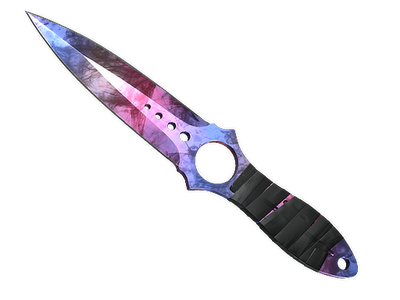
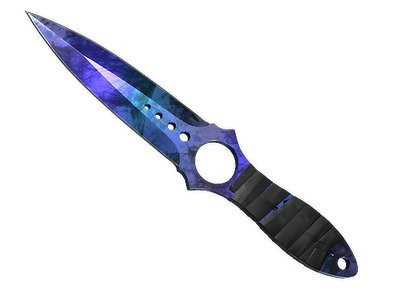
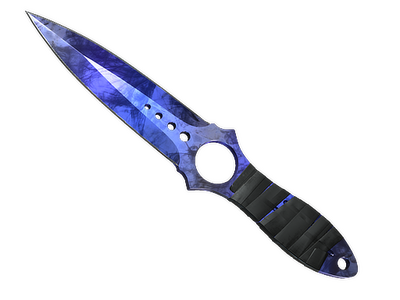
- The Fever Case expansion adds Damascus Steel, Doppler, Marble Fade, Rust Coat, Tiger Tooth and Ultraviolet to the model. This is the main reason an older list of skeleton knife cs finishes may be incomplete even if its original Shattered Web set is correct.
Doppler needs an extra check because the finish is split into Phase 1, Phase 2, Phase 3 and Phase 4, alongside the Ruby, Sapphire and Black Pearl gem variants. These are Doppler phases rather than separate base finish families. For Marble Fade, Fade and Case Hardened, the pattern layout is also worth inspecting visually instead of choosing only by finish name.
What to check in a Skeleton Knife CS2 listing
Two copies with the same finish can still differ in visible wear, pattern placement or additional item properties. The filters above the listings make those variables easier to separate before comparing offers.
- Check the exterior and float on painted versions. The useful range depends on the finish, so a lower float should be read together with the actual blade appearance rather than as a standalone quality label.
- Inspect the pattern seed on pattern-sensitive finishes. Case Hardened can distribute blue, gold and mixed areas differently from one seed to another, while Fade and Marble Fade can also change how their colours sit across the blade.
- For Doppler, compare the phase as its own characteristic. A Phase 2 listing and a Sapphire may share the Doppler name but represent visibly different colour layouts.
- Separate regular and StatTrak items when comparing listings. StatTrak versions add the kill counter property and should not be mixed with regular copies during a like-for-like comparison.
- Treat Vanilla separately from painted finishes. It appears as Not Painted and does not use the usual exterior progression of a painted skin.
If the silhouette and animation matter more than a specific finish, it can also help to compare the Skeleton with differently shaped models. The Stiletto Knife keeps a much narrower profile, the Talon Knife emphasizes its curved blade and spin, while the Butterfly Knife builds most of its identity around handle animation. The Karambit is another ring-based model, but its curved blade and reverse grip create a very different first-person view. Larger alternatives such as the M9 Bayonet give the finish more blade area to work with.
How to get a Skeleton knife in CS2
The model first appeared among the rare special items in the Shattered Web Case. The Fracture Case later reused the Shattered Web knife family with its original finish group. The Fever Case expanded the same family with Doppler, Marble Fade, Tiger Tooth, Damascus Steel, Rust Coat and Ultraviolet.
Case opening is not the only acquisition route. Valve also extended the Trade Up Contract so eligible Covert inputs can result in a knife from a collection represented by those inputs. StatTrak and regular inputs follow different output rules, so the input type and the collection's rare-special-item pool both matter when the target is a Skeleton Knife.
Buying an existing item avoids the random result of either route and lets you compare the exact exterior, float, pattern, phase and StatTrak status before choosing. That distinction is especially useful for finishes where two items under the same skin name can look noticeably different.
Buying or selling Skeleton Knife items on white.market
The white.market CS2 marketplace lets you work from the exact item properties instead of treating every copy of a finish as interchangeable. For a model with pattern-based finishes and several Doppler phases, the detailed listing data is part of the comparison rather than an extra check after choosing a price.
- Choose Skeleton Knife and narrow the grid by finish, exterior, StatTrak status, phase, float or pattern where those parameters apply.
- Open the listing and confirm that the item properties match the combination you selected. For pattern-sensitive finishes, check the displayed item rather than relying only on the skin name.
- Compare suitable listings by price after filtering out versions that do not match the required exterior, phase or other properties.
- When selling, list the exact inventory item so its float, pattern, exterior and StatTrak status remain visible to buyers comparing the model.
You can also use neighbouring knife categories to decide whether the Skeleton itself is the priority. Models such as the Bowie Knife, Kukri Knife and Classic Knife put the same basic decision — model first or finish first — into very different silhouettes.
Skeleton Knife FAQ
Does a Skeleton Knife change movement speed or knife damage?
No. Skeleton Knife is a cosmetic replacement for the standard knife and does not give a gameplay advantage through movement speed, reach or damage. Its differences are visual, including the model, finish and animations.
Can a Skeleton Knife be equipped for both sides?
Yes. The model is not exclusive to either the Terrorist or Counter-Terrorist side. It can be used in the relevant knife loadout slots rather than being tied to a faction-specific model.
Does a Vanilla Skeleton Knife have an exterior?
No. Vanilla is the unpainted version and is shown as Not Painted rather than Factory New, Minimal Wear or another painted-skin exterior. It should therefore be compared separately from finishes whose appearance changes with wear.
Are community pattern names official rarity tiers?
No. Terms used by traders for particular Case Hardened or other pattern layouts are community shorthand, not additional Valve rarity grades. The pattern seed and the actual visible layout are the useful item-level properties to check.