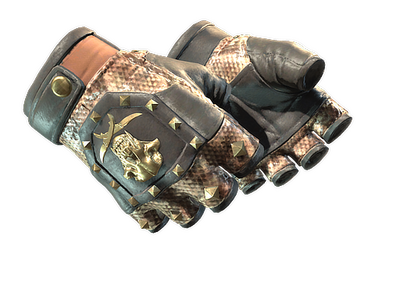
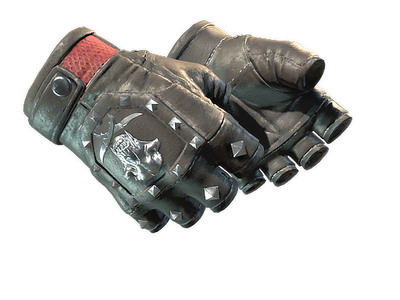
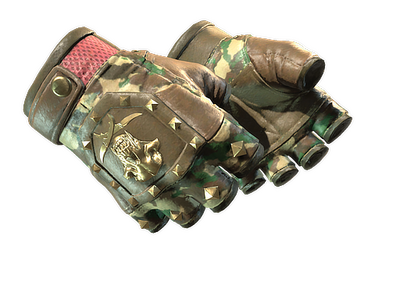
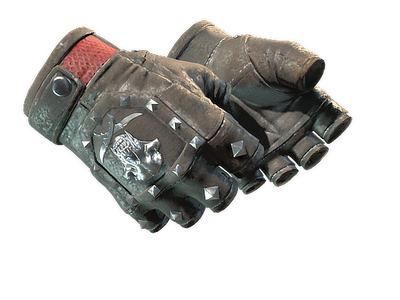
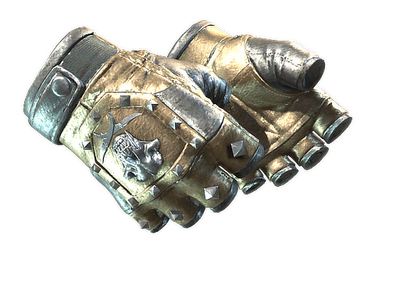
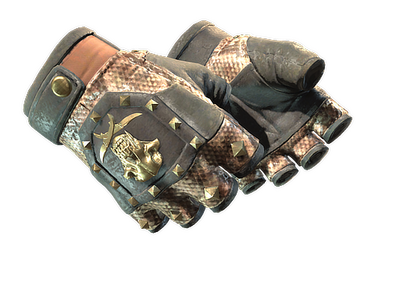
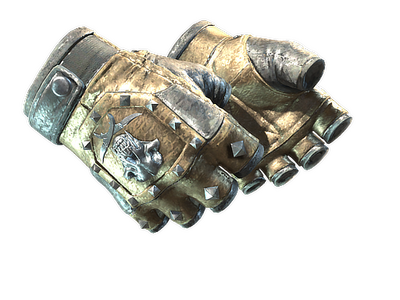
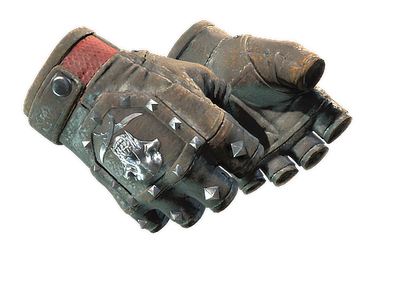
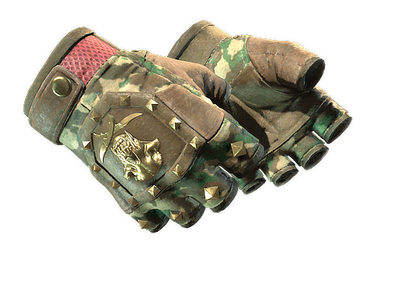
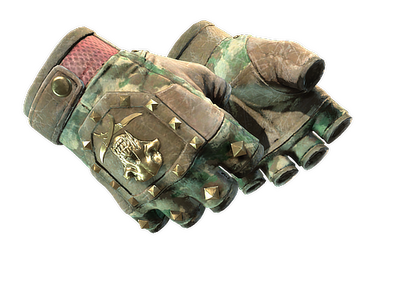
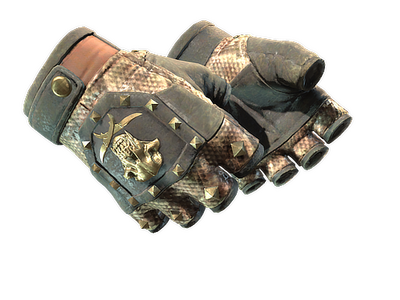
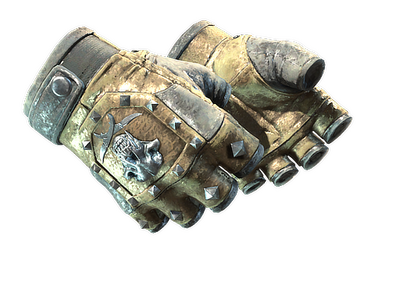
Bloodhound gloves: first-generation leather with an operation badge
Bloodhound gloves are a fingerless leather pair decorated with metal studs and the emblem of Operation Bloodhound, a CS:GO operation that ran before gloves existed as items at all. The model arrived with the Glove Case, which introduced gloves to the game, and in the CS2 gloves catalogue it belongs to the gold star tier above Covert, which is why every pair in the grid above carries the Extraordinary label.
Many Bloodhound gloves CS2 players use today started life as CSGO Bloodhound gloves and carried over to the new engine with finish, float and pattern untouched. The closest relative in the lineup is Hydra Gloves: when the second glove generation arrived with the Clutch Case, the same studded fingerless template came back under the Operation Hydra emblem, while the Bloodhound pool was left out of that release. If you would rather cover your fingertips, Sport Gloves and Specialist Gloves from the same first generation offer a completely different silhouette. Whatever you pick, gloves stay in frame with every weapon you hold, so the finish is on screen far more often than any single weapon skin.
Charred, Snakebite, Bronzed, Guerrilla: the finish pool
Every variant keeps the same studs and badge, so the decision comes down to the leather. All of them belong to the first-generation glove pool that both source cases share, which means no finish is exclusive to one case:
- Bloodhound Gloves Charred — classic black supple leather; in first person the pair reads almost entirely black, with the studs as the main contrast.
- Bloodhound Gloves Snakebite — regular leather combined with snakeskin panels, the most textured surface in the set.
- Bloodhound Gloves Bronzed — leather dyed in gunmetal and bronze, the only metallic-toned option on the model.
- Bloodhound Gloves Guerrilla — brown leather paired with camo-printed synthetic leather, the military-styled choice.
Each finish also carries its own flavour text from the CS universe. The Bronzed description, for instance, references rogue sniper Chase Turner, whose story Operation Bloodhound brought to an end, so this finish ties straight back to the badge on the glove.
What moves the price of a Bloodhound pair
Gloves carry fewer variables than knives, so comparing listings comes down to a short set of factors:
- Exterior. Glove float starts just below the Factory New ceiling, so Factory New pairs exist only in a thin slice at the very bottom of the range and are scarce on every finish.
- Float inside the exterior. Field-Tested covers a wide band: a pair near its lower edge looks close to Minimal Wear, while one near the top shows scuffs across the leather.
- Finish. Demand differs between the leathers, so prices can vary significantly between finishes, even with the same exterior.
- Pattern. Every pair has a seed, but these are leather and print textures rather than seed-driven paints like Case Hardened, so Bloodhound seeds are less important to pricing than float and finish.
If you are looking for the cheapest way into the model, start with Battle-Scarred and Well-Worn pairs, which sit at the bottom of the range on each finish. Sort the listings by price and compare the floats of the first few candidates: even within the worn exteriors, a lower number still means visibly cleaner leather.
Getting a pair: cases, trade-ups and the grid
The model drops from the Glove Case, which introduced it, and from the Operation Hydra Case, which reused the same first-generation pool. Despite the name, the Hydra case holds no Hydra Gloves; those come from later cases. In both, Bloodhound shares the gold slot with Sport and Specialist gloves, Driver Gloves, Moto Gloves and Hand Wraps, so opening a case never targets this model specifically.
The second route is the trade-up contract, which Valve extended to gold-tier items and which runs from the inventory screen inside CS2 itself. Regular Covert skins from The Glove Collection (M4A4 | Buzz Kill, SSG 08 | Dragonfire) or The Operation Hydra Collection (AWP | Oni Taiji, Five-SeveN | Hyper Beast) can be exchanged for a pair from that shared pool. The outcome is random across every model and finish in it, so no contract can be aimed at Bloodhound alone, and StatTrak Coverts never return gloves.
Newer models such as Broken Fang Gloves come from later cases with pools of their own, so Coverts from those collections will not lead to Bloodhound. Buying a listed pair remains the only route where you choose the finish and exterior before anything happens.
Buying and selling on white.market
Deals run peer to peer through Steam trade offers. The setup is done once, after which every purchase follows the same order:
- Sign in with your Steam account and add your Steam trade URL in the profile settings.
- Install the white.market browser extension or the mobile app, since trades go through one of them.
- Top up your balance with any supported payment method.
- Pick a pair in the grid, check its finish, exterior and float, and buy it.
- Accept the incoming Steam trade offer once you have checked that it holds that exact pair.
Selling mirrors the process: list the pair from your Steam inventory, set your price and confirm the trade once a buyer picks it up.
Questions before you buy
Can I pick the exact float when I buy?
Yes. Every listing is one specific pair with its float shown on the card, and the Float filter above the grid narrows the results to the range you want.
Is there a StatTrak or Vanilla version?
No. Gloves never come with StatTrak, and there is no Vanilla or Not Painted pair either, because the default hands are not an inventory item. Every listing on this page is one of the finishes above.
Do these gloves give an advantage in a match?
No. Gloves only change how your hands look; hitboxes, movement and weapon handling stay exactly the same whichever pair you equip.
Is it safe to buy gloves from another player?
It is, as long as the whole deal stays on the platform. Before accepting the Steam trade offer, check that it contains the same finish, exterior and float as the listing, and ignore anyone who contacts you to finish a trade elsewhere.